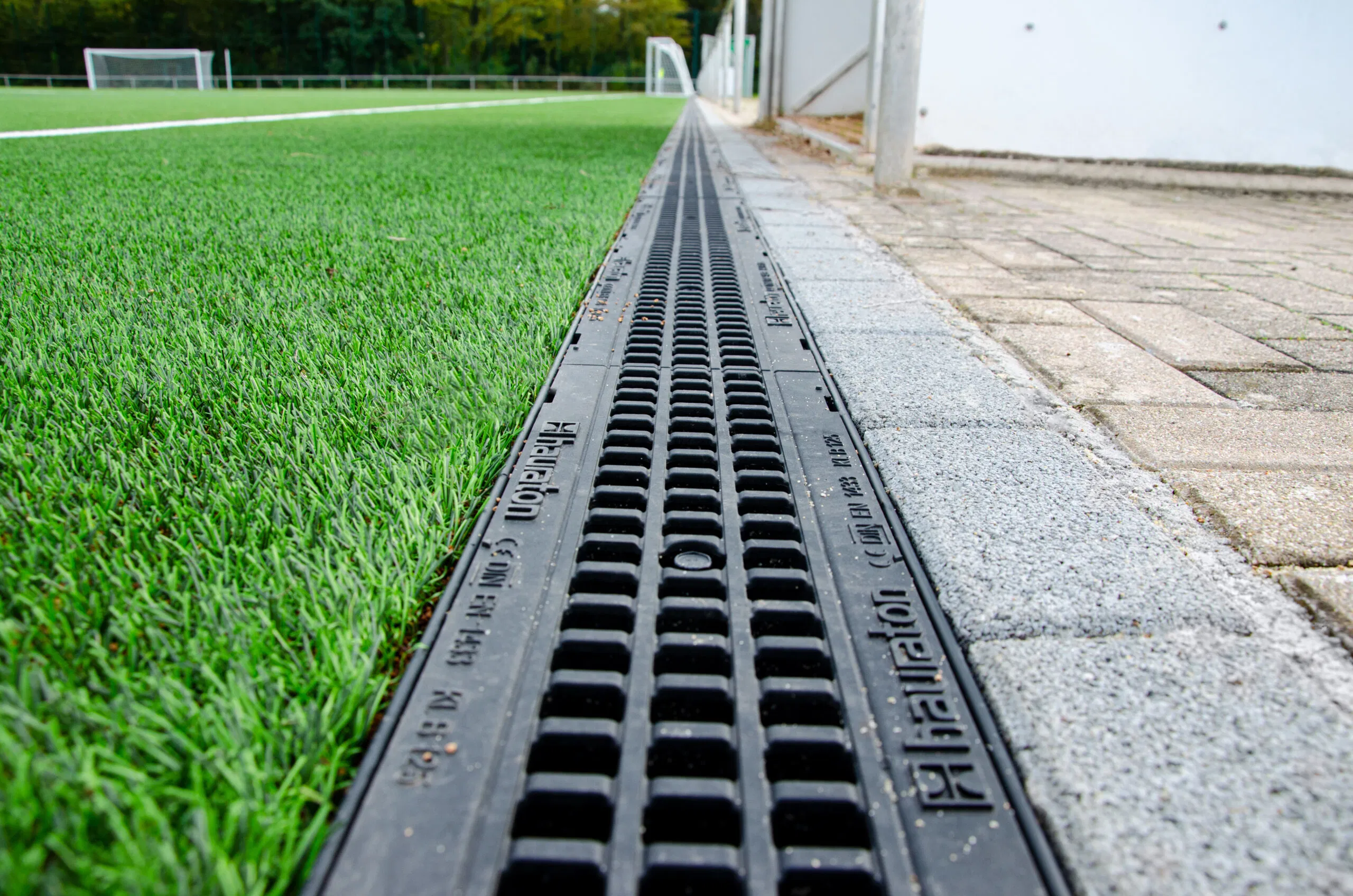
Drainage is not an optional component of a synthetic turf installation in Pearland. It is the engineering requirement that determines whether a turf surface functions correctly through a Gulf Coast wet season or fails within the first year. Pearland sits on the boundary between Harris and Brazoria counties, with large portions of the city sitting in designated Special Flood Hazard Areas that FEMA has remapped multiple times as development changed the hydrology of former rice fields, prairie, and wetland. The Brazoria County Flood Control District manages reservoir geometry and drainage infrastructure that Pearland's master-planned communities depend on for storm water management at neighborhood scale. That infrastructure shapes how individual properties drain — and where it is inadequate, individual turf installations pay the price.
Artificial Grass of Pearland designs and installs turf drainage systems for properties where standard drainage backing alone is insufficient. This service addresses three distinct drainage failure scenarios: properties where surface drainage does not exit the yard fast enough after rain, causing water to pool above the turf surface; properties where sub-surface drainage is blocked or inadequate, causing the base to retain water and undermine turf performance from below; and properties where drainage exits into areas that back up during neighborhood-level flooding, making the drainage system functionally useless during the events it was designed for.
The solution to each scenario is different, and in Pearland's flooding-aware market, the design must account for not just the property's own drainage capacity but its relationship to the surrounding drainage infrastructure. A French drain that discharges into a Mary's Creek tributary during a flooding event is not a drainage solution — it is a drainage failure waiting to happen. We design drainage systems with the neighborhood hydrology context in mind.